
Victoria Resident Lookup Sources
One source rarely establishes identity. The Victoria Central Appraisal District connects owners, parcels, situs addresses, mailing addresses, legal descriptions, and tax years. The county clerk's index follows transfers, while the elections office and court custodians have their own rules. Use the record that fits the question, then add a second independent anchor such as a date, spouse, relative, parcel description, or filed case. A name by itself is only a lead.
| Record | What It Confirms | Where | Access |
|---|---|---|---|
| CAD tax roll | Named owner, situs and mailing address, tax-year parcel identity | Victoria CAD eSearch | Public parcel search; some appraisal material is confidential |
| Deed or instrument | Transfer parties, recording date, and legal description | County Clerk public records | Disclaimer gate, redaction rules, counter and copy routes |
| Voter registration | Public voter-file fields for an allowed request area | Victoria County Elections | Roster or written request; protected information is withheld |
| Court record | Party trail, case type, dates, status, and related case details | Victoria County Odyssey | Portal and clerk access vary by record and case rule |
| Vital index | Marriage or divorce verification and age-based birth or death access | Texas DSHS | Indexes and certified copies have different rules |
| Business filing | Public entity affiliation, filing status, and filing address | Texas SOS searches | SOSDirect and custodian copy procedures |
Begin with CAD when the person may own property. Begin with an historic directory or library collection when the address is old. A court party search can help distinguish names, but it does not establish that a person is the same person shown in an appraisal record. A filing address or a professional credential is an affiliation detail, not proof of a current residence.
Victoria Resident Lookup Matches
Normalize the name before searching. Try initials, middle names, suffixes, maiden names, and reasonable spelling variants. Then require two anchors from independent sources. A parcel's legal description, a court filing date, a spouse named in a directory, or a dated obituary can separate two people with the same name. Compare a CAD mailing address to the situs address rather than treating them as the same thing. The situs is the parcel's physical location; the mailing address is where tax correspondence goes.
- Search the person in CAD when ownership is plausible, and save the parcel, tax year, situs, mailing address, and legal description that are actually displayed.
- Check the county deed index using the legal description or party name. A grantor transfers an interest; a grantee receives it. Confirm the document with the clerk if the online index is unclear.
- Run the name and variants through the appropriate court route. Compare the court, filing date, case status, attorney, and case number with the other anchors.
- Use a vital index, probate file, library notice, or dated directory entry to test the relationship or time period. Request a certified record only from the custodian and only when eligible.
Keep a short research log of the exact spelling, source, date searched, and negative results. That prevents a later search from quietly merging two people. It also makes a courthouse, mail, or public-information request more precise when an online route stops short.
Note: CAD's mailing and situs fields may point to different places, so neither field alone proves who currently occupies the parcel.
Victoria Court Lookup Trails
Victoria court research has separate local, county, statewide, and federal paths. The City’s Municipal Court route covers citations and reports upcoming docket, date, final disposition, fines or fees, and citation cases, although final dispositions five years old or older are unavailable through its stated lookup and data may lag one to three business days. Odyssey offers Victoria County choices for criminal, civil, family and probate records, plus a calendar. Statewide re:SearchTX can add participating court indexes, but its field and result behavior was not fully verified during the research.
The Victoria County Odyssey search is the verified route for the court choices shown here. It offers case, defendant, citation, or attorney modes; a party search uses last and first name, with optional middle name and date of birth. Status and filed-date ranges can narrow a broad name. No live docket was inspected, so document links, result labels, image fees, and redaction behavior should be confirmed with the clerk.
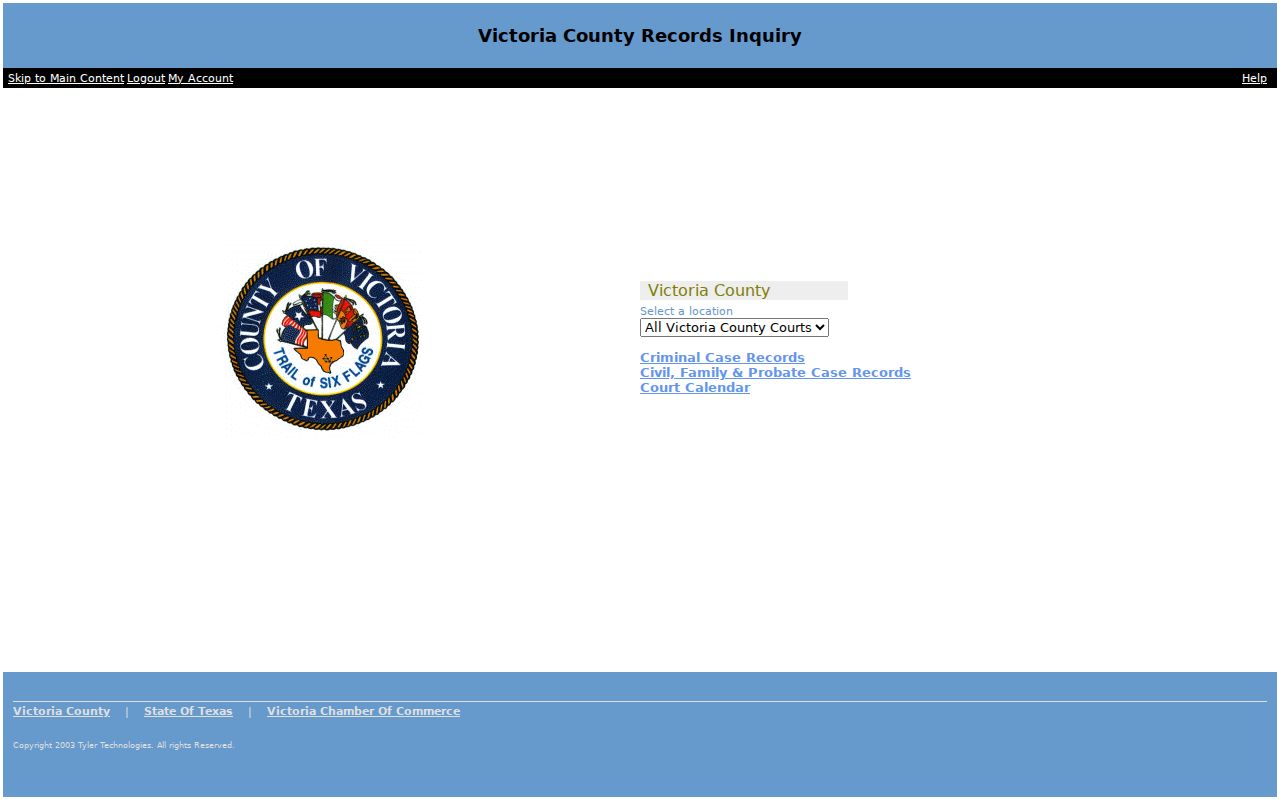
For files or certification, ask the holding clerk about copies, archived-file retrieval, public-terminal access, and fees. Juvenile, sealed, expunged, and adoption records are not ordinary name-search records. Federal cases use PACER, not the county portal. Civil and family parties and attorneys had a re:SearchTX e-notice transition effective October 1, 2025, while criminal documents continue e-delivery.
Victoria Vital Lookup Access
Vital records answer narrow questions and have specific custodians. Under Texas Government Code Section 552.115, birth records become public after 75 years and death records after 25 years; unidentified-decedent records are public after one year. The City of Victoria is the local registrar for city birth and death certificates. The County Clerk issues certified marriage licenses, and the District Clerk issues certified divorce decrees. DSHS supplies statewide verification products and qualified-person ordering.
Texas marriage verification indexes begin in 1966 and divorce verification indexes begin in 1968. A verification is not the same as a certified underlying record. DSHS lists applications, online ordering, mail, and Austin walk-in paths. Most online orders are stated as taking 20 to 25 business days and are nonrefundable; many in-person orders are same day, with some taking 24 hours. Call the local custodian before visiting to confirm identification, eligibility, fee, and current counter hours.
- Docket
- A court's running case record. It helps identify a case number, parties, dates, and status, but it is not identity proof by itself.
- Index
- A finding list that points to a record. It may provide limited facts without providing the original document or a certified copy.
- Certified copy
- A custodian-issued copy carrying the certification required for uses that demand an official record. Eligibility and fees can apply.
Victoria Adoption Lookup Route
Birth-parent research has a specific Texas route. The Central Adoption Registry serves eligible adult adoptees born or adopted in Texas, birth parents, and biological siblings of adult adoptees. It is not a general name-search database. Both sides must register, and identifying information follows consent, counseling, and biography exchange. The research notes a $30 application fee.
For an heir question, use probate names and fiduciary or heir addresses in the court file, then test them with deeds or obituaries. For an old classmate, use Victoria Public Library yearbooks, local history material, newspaper resources, and UHV collections. No official universal alumni directory was located. These routes respect the record type instead of asking a property or voter source to supply a relationship it does not maintain.
Victoria Resident Lookup Dead Ends
Online coverage has real limits in Victoria. The county recorder has a disclaimer gate and does not state its historical index cutoff. A live public voter name form with a complete field order was not verified, nor were live jail fields, historical poll books, a complete permit archive, or direct directory scans. Treat an unavailable result as a limit of that access route, not proof that a person never lived in Victoria.
Use the access channel that covers the gap. The County Clerk counter can address deed, marriage, probate, assumed-name, and related filings. A written request under the Texas Public Information Act may be appropriate for records held by a public body, subject to exceptions and fees. For older names, the Victoria Public Library's O'Connor Room offers directories, Advocate microfilm and index material, obituary files, yearbooks, and licensed genealogy databases. UHV's Regional History Center is by appointment and advises allowing for off-site retrieval.
The library's Advocate microfilm reaches toward 1876, though older runs are incomplete. Its local subject and title index is specifically 1968 to 2004, and the obituary file covers 1981 to 1992. Those date windows help choose a source rather than assuming a complete online run. The library and archive alternatives are especially useful when a one-person search is historical rather than current.
Victoria Business Lookup Context
A business connection can help distinguish a name, but public filings need careful reading. The Texas Secretary of State search options lead to entity filings, copies, certificates, and SOSDirect access. County assumed-name filings can add another local route. SOS records may show an entity, registered agent, officer, or address as the filing exposes. Check entity status and filing date before deciding whether the connection is current.
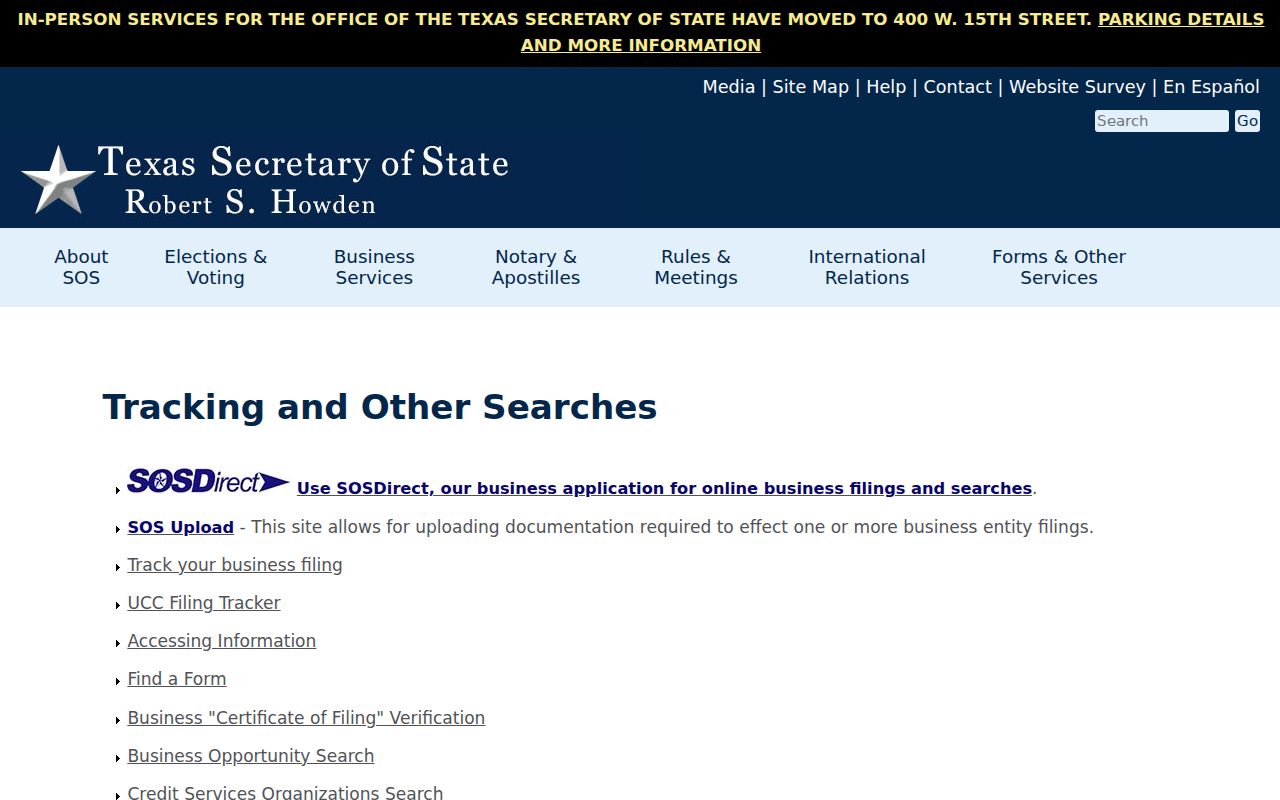
Professional searches have the same limit. TDLR, TEA, and the State Bar each publish their own name searches and status details. A credential can establish a public professional record, not a home address. UCC results concern secured transactions and may be searched through a paid state route, so they should be used only when that filing context matters.
Victoria Registry Lookup Boundary
The Texas DPS public sex-offender registry is separate from general court or property research. DPS guidance identifies supported name, address, map, ZIP, county, and radius search modes, and the registry excludes protected items such as Social Security numbers, driver-license data, telephone numbers, online identifiers, and victim identity. It should never be used to infer facts beyond the official registry record.
The official Texas DPS registry is the appropriate source for a registry question, rather than a commercial compilation. A 2024 DPS newsletter described a public-registry interface overhaul with similar functionality and improved advanced search and results. Confirm any current status with the responsible official source.
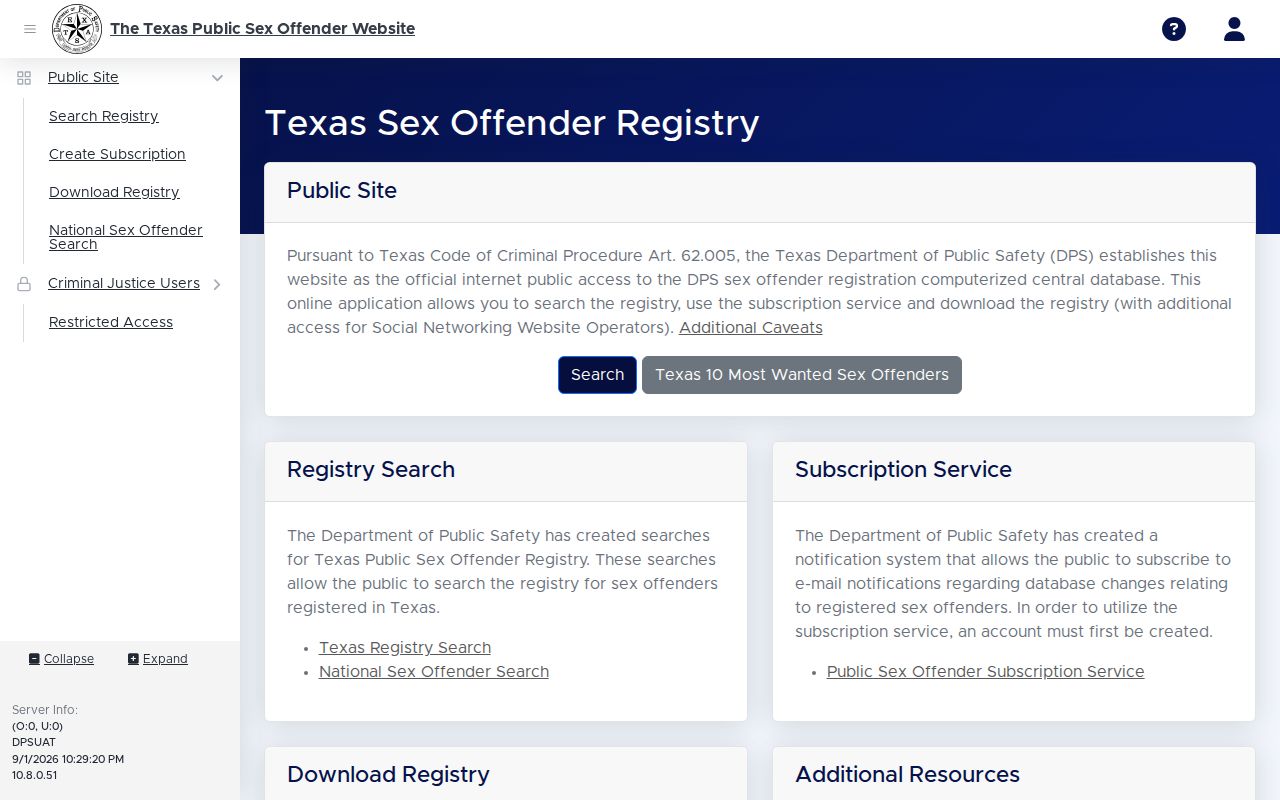
A DPS criminal-history search is also different from a local docket: the name-based public search costs $10, and only fingerprinting positively links identity. Do not merge a similar name from a registry, criminal-history product, or court index into a resident record without independent confirmation.
Victoria Resident Lookup Limits
Texas protects important personal information. The Address Confidentiality Program gives eligible survivors of family violence, sexual assault, abuse, stalking, and trafficking a substitute mailing-address process, and a confidential residence is not exposed in the ordinary voter system. Covered officials may have protections for address, phone, emergency-contact, date-of-birth, and Social Security fields. Library-use records and Neighborhood Watch participant details are also confidential.
Voter records do not disclose Social Security, Texas driver-license, or DPS identification numbers. DMV personal information is restricted, and utility, delivery, renter, and household-member data are not public resident lists. If a commercial compilation shows an error, its opt-out procedure is separate from the government custodian's record. Confirm material facts with the custodian rather than assuming a compiled listing is current.
Lawful use. A Victoria resident lookup is for personal, lawful research. Texas stalking and harassment laws can apply to threats, surveillance, or repeated unwanted conduct; do not use records to stalk, harass, intimidate, or harm anyone.
Note: A restricted or missing record may reflect confidentiality, a sealed file, or an unverified coverage gap rather than a negative fact about a person.